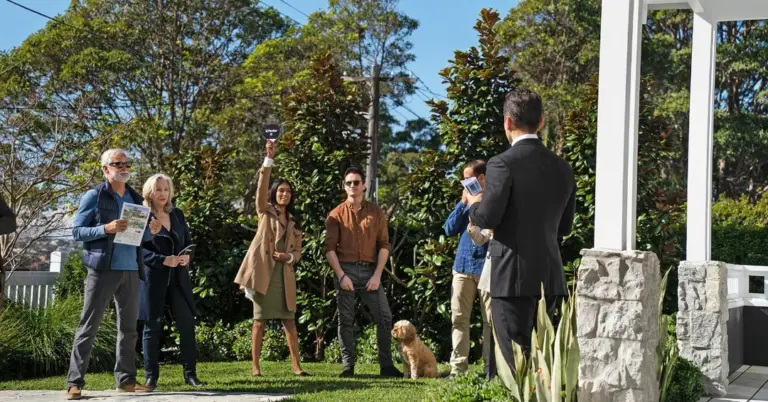
Will the new proposed NSW underquoting laws really help buyers?






Will the new proposed NSW underquoting laws really help buyers?
Weekend House-Hunting With Kids? These New Rules Might Save Your Sanity
If you’ve ever wrangled kids into the car for Saturday inspections, fallen in love with a house, and then watched it sell for $300k above the advertised guide, you’ll know underquoting isn’t just annoying – it’s gutting. The NSW Government says it’s finally stepping in to fix the game. But will these proposed new laws actually make house-hunting fairer, or just create new loopholes for agents to jump through?
The NSW Government’s proposed reforms to tackle underquoting have made headlines, and for good reason. They aim to make the real estate industry more transparent and less frustrating for buyers who have spent weekends chasing homes that sell for hundreds of thousands above the advertised price guide.
To unpack what these changes really mean for local buyers, we’ve asked local property expert and buyer’s agent Judith Treanor to weigh in.
🏡 Here’s a summary of the proposed changes and what it means for you.
-
Much bigger fines for agents who underquote — increase from $22,000 to $110,000, or three times the selling agent’s commission, whichever is greater.
-
Every property must display a price or price guide – no more “contact agent” mysteries
-
Agents must explain how the selling price was calculated through a Statement of Information (SOI)
-
Agents must calculate and revise the estimated selling price in accordance with new, clearer guidelines issued by the NSW Fair Trading Commissioner (rather than simply providing a “realistic” guide)
-
Stricter rules for ads, meaning agents can’t keep promoting a price once it’s been proven unrealistic
On paper, it looks like a win for homebuyers. But will it actually make your weekends any less chaotic?

🏡 A Positive Step, But Not a Perfect Solution
For many buyers, just seeing a price guide at all will be a relief. It will save time and emotional energy when you no longer have to be a mind reader to work out if a home is even in your ballpark.
But as anyone who’s been through the Sydney market knows, price guides can still be well below the eventual sale price, and it’s notoriously difficult for NSW Fair Trading to prove deliberate underquoting. Agents can always claim strong demand drove the higher sale result.
That’s why even with these reforms, buyers still need to approach their home search from an informed position, not an emotional one, and, ideally, with expert support.

🏡 Why Local Knowledge Still Matters
Even with clearer price guides, the Inner West property market is still its own unique ecosystem. Some agents consistently under-guide to create a crowd, others price more accurately, and some can swing either way depending on the campaign. That’s where on-the-ground experience makes a difference.
At Keys to Sydney, I keep a professional eye on the market, attend inspections, get to know the agents, and watch results across the Inner West and beyond. That means I can gauge which agents tend to under-guide to create a crowd, and which ones are usually on or around the money.
This on-the-ground knowledge is what allows me to interpret a price guide realistically for clients, even when the advertised figure doesn’t tell the full story.

🏡 Will the New Law Make Buyers Agents Redundant?
In short, no.
A price guide, even a more accurate one, doesn’t tell you whether a home is fairly valued, where it will land on auction day, or whether you should stretch for it.. It also can’t tell you if there’s structural work looming, how the floorplan will age with kids, or what comparable homes actually sold for last weekend.
That’s where a Buyers Agent comes in. We don’t just read the guide; we interpret it against market behaviour, recent sales, suburb sentiment and negotiation patterns. The reforms may remove some smoke and mirrors, but they don’t replace strategy – and strategy is what stops buyers from bidding blindly or emotionally.
Want to find out more on why you should use a Buyers Agent? Click here.

🏡 Final Thoughts
The NSW Government’s proposed underquoting reforms are a positive step toward fixing a problem we all know exists. They may make it easier for buyers to navigate the early stages of the process, , but they won’t remove the emotional whiplash or stop prices from running beyond expectations.
To be truly transparent, the guide should reflect the figure agreed to in the selling agent’s client agreement with the vendor – the price the agent actually believes the property is worth.. If the market feedback during the campaign pushes that price higher or lower, then the guide can be adjusted accordingly.
Some industry commentators have even suggested publishing the auction reserve prior to an auction. It’s an intriguing suggestion, but let’s be realistic: doing so would fundamentally change how Sydney property is sold and strip away one of the biggest levers in auction strategy. It’s unlikely to happen — at least not any time soon.
Sydney’s property market is dynamic, emotional, and fiercely competitive. If you want someone in your corner to guide you, cut through the noise, and help avoid the heartbreak of chasing homes you were never going to secure, that’s where I come in. I live and breathe the Inner West and Lower North Shore markets and specialise in helping families buy with confidence, not confusion.
Buying a home shouldn’t feel like a guessing game. If you’re ready for clarity, strategy and support, let’s chat.

Judith Treanor is a Property Expert and Buyer’s Agent specialising in the Inner West and the Lower North Shore.
Want to learn more about Judith? Read our recent Getting To Know You interview where Judith shares her journey to becoming one of the Inner West’s most sought-after buyer’s agents.
Judith Treanor, Buyer’s Agent
☎️ 0438 523 064
🌏 Keys to Sydney
About Author