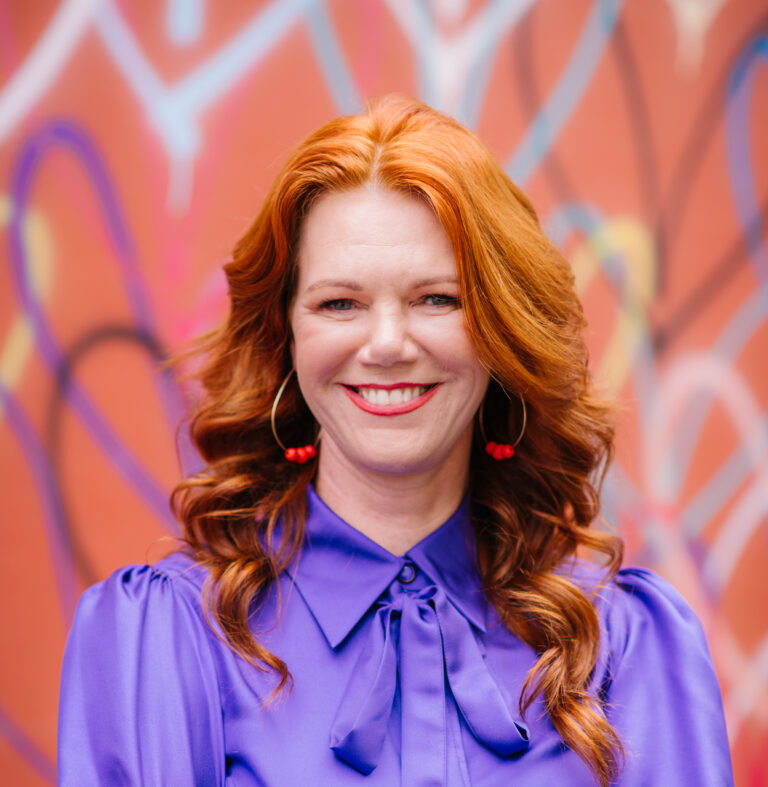
Getting to Know… Michelle May Buyers Agent




Meet Michelle May, Buyer’s Agent, Inner West local and straight-talking guide for buyers trying to make one of life’s biggest decisions without losing their minds.
Buying property in Sydney is rarely simple. Add kids, school catchments, work, rising costs, auction pressure and a market that seems to change mood by the week, and it can start to feel less like a search and more like a second job.
That’s where Michelle May comes in.
Michelle is the founder and principal of Michelle May Buyers Agents, an Inner West-based buyer’s agency. She is also the host of the Buy Your Side podcast and creator of Better Home Buying, an online education program for buyers who want to learn how to buy well on their own.
We spoke to Michelle about buying solo, the confusion loop many families get stuck in, the mistakes tired buyers make, and what Inner West families should be thinking about beyond suburb, price and bedrooms.
🏡 How did you become a buyer’s agent?
Honestly? It started with an obsession with a reality tv show called “Location, Location, Location”. I was living in the UK working long-haul for British Airways and became completely hooked. I started flipping my own properties on the side, and the seed was planted.
When I moved to Australia, and after having my second child, I wanted to return to work, and a career as a buyer’s agent felt like the perfect way to put everything I’d learned to use. I joined one of the only buyer’s agencies in Australia at the time, back in 2008, where I spent over a year learning the craft properly before I was even allowed to speak with a client.
Eighteen years later, the industry has grown significantly. More individuals and families are working with a buyer’s agent than ever, and that’s a good thing. The question now isn’t whether to use one it’s how to tell a good one from one who shouldn’t be near your purchase.

🏡 Many of your clients are women buying independently. What makes that experience different?
I understand it more personally than most. I’m a single parent myself in Sydney, without family support here, and I’ve navigated some of the biggest decisions of my life without a partner to talk things through with. So when a woman walks into my office carrying the entire weight of this decision on her own, I don’t need it explained to me. I’ve felt it.
What makes the experience different isn’t the practical side of buying, women are more than capable of doing every part of the process. It’s the absence of a sounding board.
When you’re buying with a partner, you debrief at the end of the day. You sanity-check each other. You share the doubt. When you’re buying alone, every doubt sits with you. A lot of my work is exactly that, being the trusted, experienced second voice a buyer doesn’t otherwise have. Friends and family and colleagues are well-meaning, but they aren’t unbiased, and they’re not experienced in property at the level a decision like this requires.
🏡 What pressures are Inner West buyers facing right now?
The market has genuinely shifted. We’re now mostly in a buyer’s market, clearance rates have softened, and the wider world feels uncertain. Everyone has an opinion about whether you should be buying at all, your parents, your broker, the headlines. That uncertainty doesn’t make buyers more decisive, it makes them freeze.
The dominant fear right now is what we call FOOP in the industry, fear of overpaying. No one wants to be the buyer who paid 2024 prices in 2026, and that thought is paralysing people. But while the average buyer is frozen, genuinely good properties still have competition and still sell. More are being sold quietly, off-market, through networks the average buyer simply doesn’t see. So the real pressure right now isn’t the market itself. It’s knowing how to act sensibly when everyone around you is telling you to wait.
🏡 How do buyers know if they’re stuck in what you call the “confusion loop”?
It starts with excitement: that emotional spark of imagining a new chapter for your family.
Then the advice piles up, from parents, brokers, friends, podcasts, headlines, selling agents. None of it agrees. That leads to overwhelm, where you stop trusting your own judgement and start second-guessing every shortlist.
Finally there’s delay: months or even years of looking without ever buying.
You recognise it when you’ve been actively “looking” for a long time without actually moving forward. When you can’t tell whether you’re being thorough or just stalling. I call it the “Buyer Confusion Loop”, and naming it is the first step out of it. I’ll be writing about this in much more depth in an upcoming piece for the Inner West Mums – so stay tuned.

🌟Michelle’s quick buyer reset
If you’re not sure whether you’re being careful or just stuck, ask yourself:
- Have I been looking for months without making a clear decision?
- Am I asking too many people for advice and feeling worse afterwards?
- Do I keep changing suburbs, budgets or property types?
- Am I relying on the selling agent’s version of value?
- Do I know what I will and won’t compromise on before I inspect?
Don’t mistake busy looking for making progress. They’re very different things.
🏡 In the Inner West, there’s often a gap between budget and reality. How do you help clients handle that?
I tell them the truth, and I do it early.
The kindest thing I can do for a client is not let them spend six months chasing something the market isn’t going to give them at their price.
But the truth on its own isn’t enough, you have to give people somewhere useful to go with it.
So we look at trade-offs. Maybe the catchment is non-negotiable but the block size flexes. Maybe shifting one suburb opens up a better property for the same investment. Maybe waiting six months is smarter than forcing the wrong decision. Maybe it’s worth stretching, if the asset is genuinely the right one for the long term.
The defeat usually comes from feeling stuck. Once people can see real options on the other side of the trade-off, the energy shifts.
🏡 For families buying a home, what should they be thinking about beyond suburb, price and number of bedrooms?
Beyond suburb, price and bedrooms, families need to think about how the home will actually function over time.
A few things people consistently disregard are the things that determine how a home really feels to live in.
Light and orientation are huge. They dramatically affect how a home feels to live in day to day, but buyers don’t give them enough consideration. Floor plan flow is another one, especially for the life stage you’re entering, not the one you’re in now.
A toddler today is a teenager in ten years and you’ll still be in the same house.
In the Inner West acoustic privacy really matter too – especially in terraces and semis: neighbours, parties and road noise. Renovation feasibility is another big one because heritage and council controls are far more restrictive than people realise.
If it’s an apartment look at the strata community, not just the building. And take a long view: what’s happening to the street, the zoning, the surrounding development pipeline over the next five to ten years.
A home is the biggest financial and emotional decision most families make. It deserves to be assessed as more than a checklist.
🏡 What mistakes do tired buyers make?
Three big ones, all driven by exhaustion.
First, they start compromising on the wrong things. After missing out a few times, the temptation is to lower the bar on something fundamental (like location, layout, light) just to be done with it. Those compromises haunt you.
Second, they skip the due diligence to move quickly. The building and pest gets a once-over, the strata report doesn’t get read properly, the heritage restrictions don’t get checked. The same buyers who would spend a weekend researching a $10,000 holiday will spend twenty minutes on a $3 million decision because they’re burnt out.
And third, they bid emotionally at auction. After three or four misses, the next auction feels like the one you have to win, and the limit you set on Friday becomes a suggestion by Saturday morning.
What does a buyer’s agent actually do beyond finding properties?
The search is honestly the smallest part of the job.
The bigger work sits in strategy: what should you actually be buying, and why? The evaluation: is this property genuinely worth pursuing? Then due diligence, price negotiation or auction strategy.
The biggest difference I make is the decision-making support. Having someone experienced who can say “this one is worth fighting for,” “this one isn’t,” “walk away,” or “stretch.”
Buyers don’t usually need more information. They need someone to help them think clearly with the information they already have.
What practical advice would you give to someone who buying on their own?
Read every strata report fully, don’t accept the agent’s summary.
Get a properly independent building and pest inspector, not one the selling agent recommends.
Set a maximum price before auction and write it down, with a trusted person who will hold you to it.
Understand the heritage and zoning rules before you bid – not after – and spend more time on the decision-making than on the searching, that’s where the value is.
Don’t mistake “busy looking” for “making progress.” They’re very different things.
Why did you create Buy Your Side and Better Home Buying?
Because the cost of buying badly is enormous, and the people who most need expert help often can’t afford full advocacy – that always sat uncomfortably with me. I didn’t want my expertise to only be available to people writing big cheques.
Buy Your Side podcast is free. Anyone can listen. Better Home Buying is the structured online program for people who want to be guided through the process properly and learn how to buy well on their own.
Different people need different levels of support at different points in their buying journey. I wanted to make sure there was something genuinely useful for all of them.
🌟 Keen to learn how Michelle can help you find your dream home? Click here to book your free consultation or reach out to Michelle on
(02) 7241 771.
About Author